Rescued from Oblivion
Digital exhibition – Lager Liebenau. Excavation and Memory
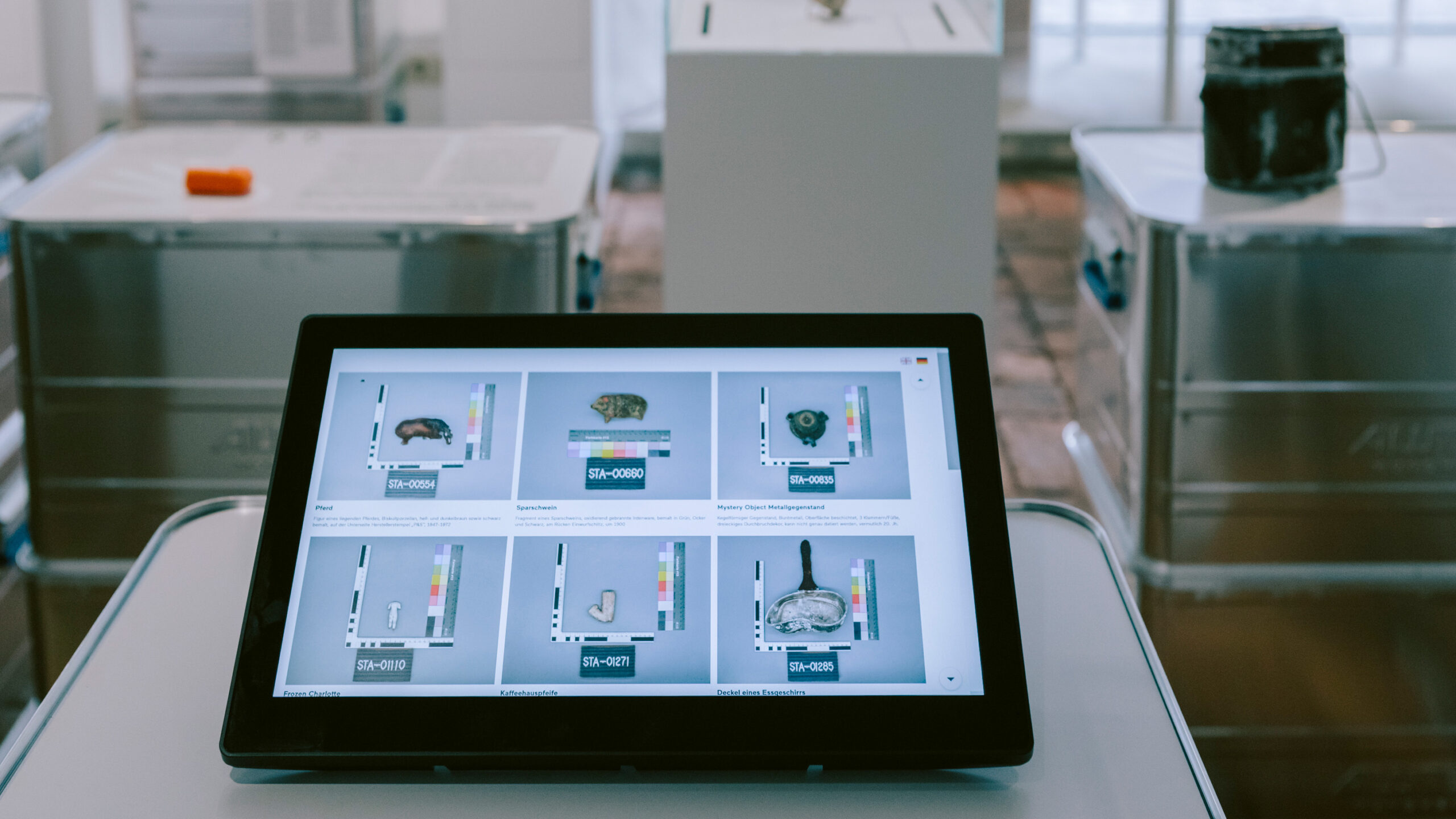
During the Nazi era, the Liebenau camp was not only a camp for resettlers and forced laborers, but also a site of Nazi crimes. Between 1940/41 and 1945, thousands of people from various countries were housed in the wooden barracks located here, the majority against their will.
These people are commemorated by the countless artifacts discovered during archaeological excavations between 2017 and 2022 and handed over to the Graz City Archaeology Department at the Graz Museum. Other artifacts, however, tell the story of the time before the camp was located here, and still others of the years after 1945.
350 of these objects were processed as part of the project “Rescued from Oblivion—Digitization of Personal Objects from the Site of the Former Liebenau Forced-Labor Camp” (short title: Liebenau 3D), funded by the Federal Ministry of Housing, Art, Culture, Media, and Sports under the “Digital Cultural Heritage” funding program. The selected objects were captured using 3D scanners, digitally photographed, and cataloged.
Every find tells a story. Some reveal it at first glance, while others only do so upon closer inspection. Combs, toothbrushes, and other hygiene items, as well as shoes, buttons, dishes, and silverware, along with children’s toys, decorative items, and everyday objects, may seem unremarkable at first. Yet it is precisely these objects that tell us about the people who lived here, about their daily lives, their hopes, and the conditions under which they had to live. They preserve memories, even when the eyewitnesses themselves can no longer recount them. Archaeologists thus become mediators between the past and the present: they decipher the “language” of the objects and make their stories legible once again.
The following artifacts tell the eventful history of the historic site “Liebenau Camp.” They span the period from before the camp was built, through its use as a camp for resettlers and forced laborers, to the postwar era. These objects reveal both the traces of the Nazi policies of violence and exclusion and the changes the site underwent after 1945. Not every object, however, readily reveals its story. Our “Mystery Objects” exemplify the challenges of contemporary archaeology at a site with a turbulent history: They raise questions about their function, their context, and the people behind them, and show that the past cannot always be fully deciphered.
Before the camp
Before the barracks camp was built in the winter of 1940/41, this site, east of the Mur River, was fallow land bordered to the northeast by the Schönau and Kirchner barracks and to the northwest by a fertilizer factory (now a soap factory). To the south and east, there were only a few scattered houses.
According to contemporary newspaper reports, there was a landfill south of the fertilizer factory on the Mur River around 1900, which could explain the presence of objects from the late 19th and early 20th centuries in this area. However, some of the older objects might also be connected to the camp, as they could have been brought here by the people housed there from their home countries.
Coffee House Clay Pipe
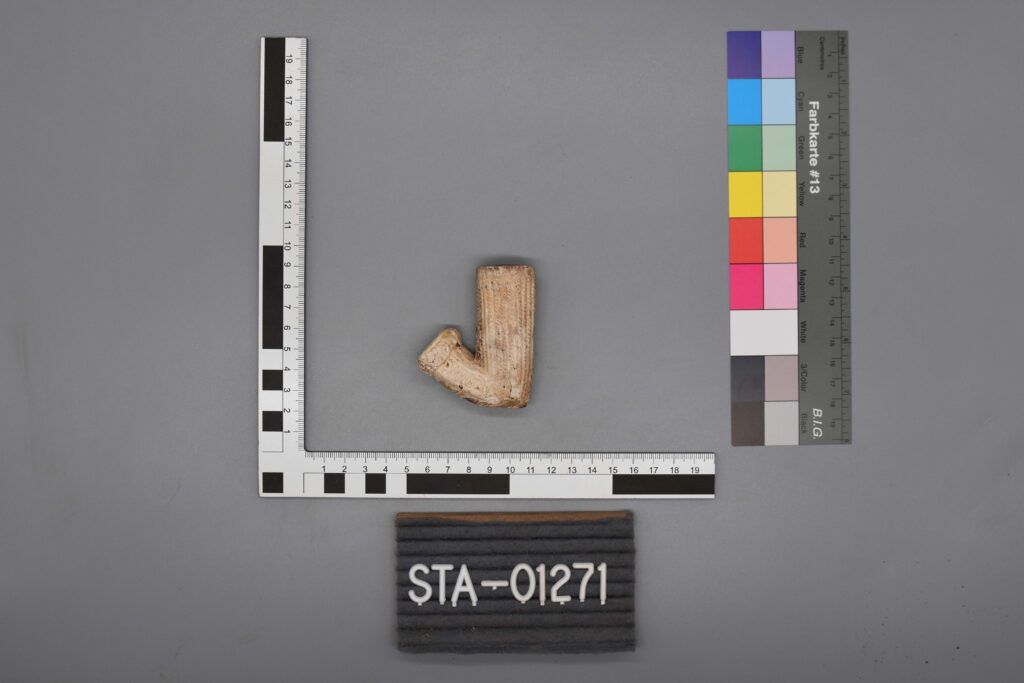
Around 1800, smoking tobacco in a pipe replaced the consumption of snuff tobacco in Graz. In pubs, men could rent a pipe stuffed with tobacco, whereas smoking was considered improper for women. The idea originated in Vienna, which is why these pipes are called Viennese coffee house pipes. They had a long wooden pipe with a mouthpiece and a decorated, hexagonal bowl made of white pipe clay. Pipe makers from the Westerwald region of Germany developed the shape for the market in the Habsburg Empire. Its presence in the camp context has remained unclear; the pipe was found in a filled bomb crater along with other objects.
The camp 1940/41-1945
In the winter of 1940/41, the first resettled families, mostly from Bukovina (now Ukraine and Romania), arrived at the camp. Soon after, forced laborers, primarily from France, Italy, and Eastern Europe, also housed here; most of them were forced to work at the Steyr-Daimler-Puch-AG factory, which was located on the opposite bank of the river. The Puchsteg bridge was built across the Mur River in 1942 specifically for them.
A hierarchy based on “racial-ideological” principles prevailed in the camp, which particularly disadvantaged inmates from the East. In early April 1945, the camp also became the scene of the Nazi regime’s final crimes. It was a stop on the death march of Jewish men and women from Hungary, who were driven from the “Südostwall” to Mauthausen and Gunskirchen. The prisoners were forced to spend the night outdoors and received almost no food or medical care. At least 34 people were murdered in the camp and buried in mass graves.
Comb with Owner’s Inscription
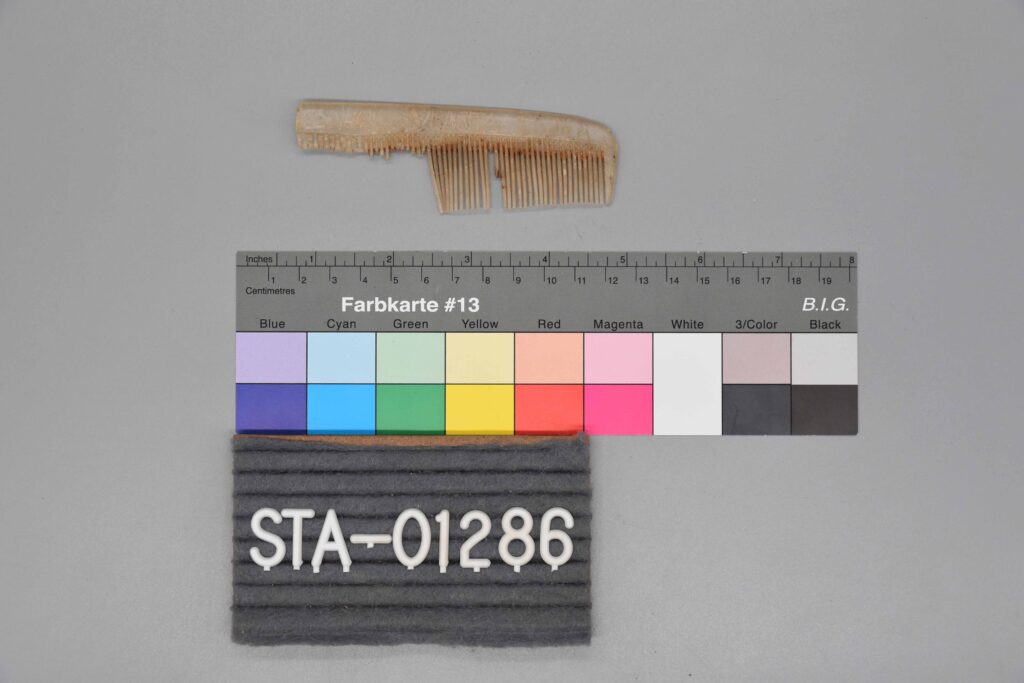
Combs have been used for personal hygiene since they first appeared around 10,000 years ago. Originally, they were used to remove vermin and dirt from hair and beards; only later were they used for hairstyles.
A comb always consists of a handle and teeth, which can be arranged at different intervals and in different lengths. The finer the teeth, the more the comb was used to remove vermin, while the coarse teeth were used to remove coarser dirt. The condition of the comb from Camp Liebenau suggests frequent use.
After the camp
After the war ended, the wooden barracks were used as refugee camps. In 1947, the city of Graz purchased the site, including all the buildings and the Puchsteg bridge, which was demolished in 2019 and rebuilt further north. The camp barracks were gradually replaced by wooden structures to alleviate the housing shortage of the postwar years; the street layout originally designed for the Nazi camp was preserved in the process.
The new housing development at Grünanger, as the area is now known, was long considered a disadvantaged residential area. From 1999 to 2006, the old buildings were renovated and new ones were constructed. The development was densified in accordance with eco-social housing concepts. In 2017, a comprehensive modernization project began with the construction of new municipal housing units. The site of the former camp is now a densely developed residential area and a place for sports and recreational activities, featuring a city beach, tennis courts, parks, a community gardening club, and a youth center.
Head Badge of a Puch Bicycle
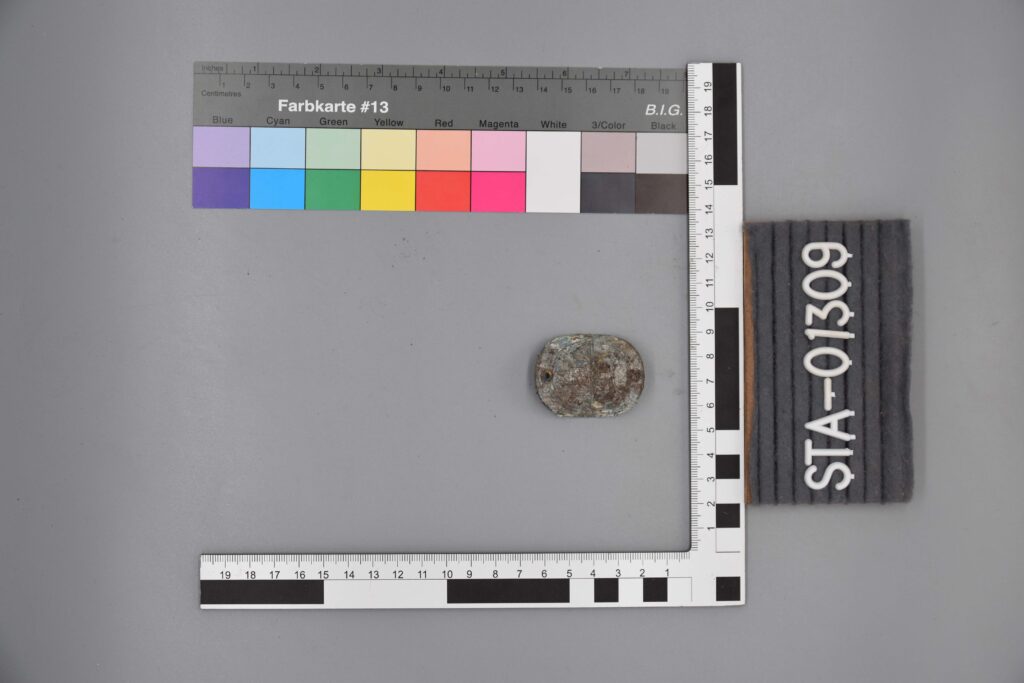
The badge adorned the frame of a CITY-series bicycle manufactured in 1937 at the Puch factory in Graz. It shows the company name Steyr-Daimler-Puch AG around the outside and the type designation on the inside. Bicycles of this type were available in models for men and women.
Before the Anschluss in 1938, bicycles were manufactured in Graz for Steyr-Daimler-Puch AG, after which there was a gradual shift to arms production. Until 1945, several thousand forced labourers were employed at the two Puch factories. They were housed in the Liebenau and Murfeld I and II camps.
“Mystery Objects”
Archaeological finds cannot always be identified at first glance. Sometimes, correct identification is only possible through extensive research or with the help of conservators, who can provide clues about manufacturing characteristics or materials. The objects shown here, which date from the late 19th and early 20th centuries, have kept the archaeologists at Graz City Archaeology busy for quite some time, as they have survived only in fragments.
If objects that are only a little over 100 years old cannot always be identified right away, it’s no surprise that objects that are hundreds or thousands of years old sometimes remain a mystery to this day.
Metal object
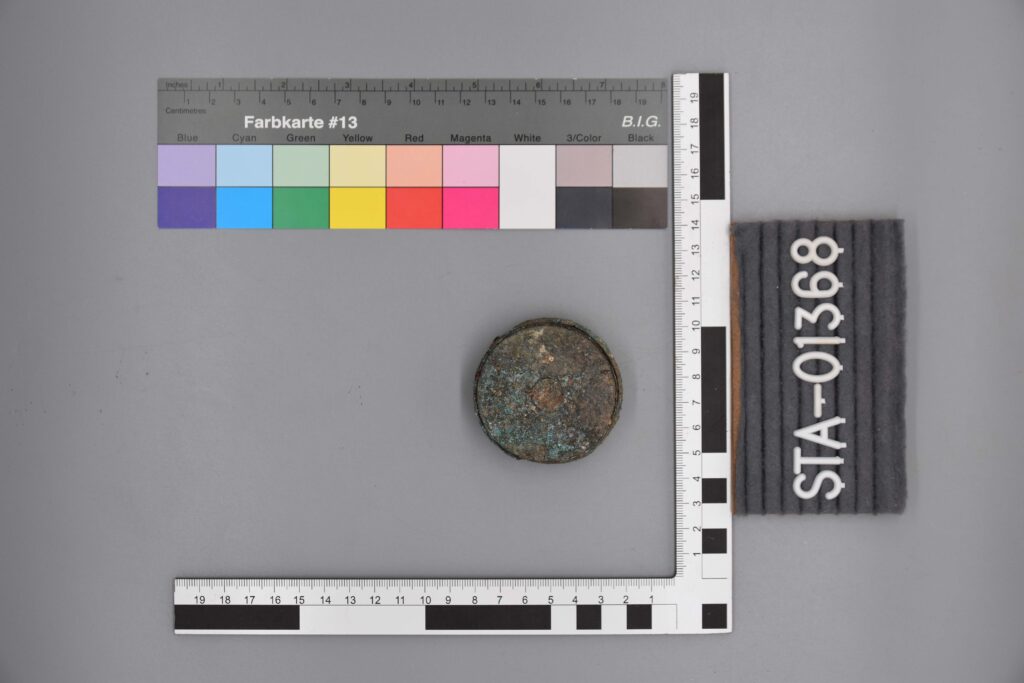
It is a two-part, cylindrical object made of non-ferrous metal that is heavily corroded. One part has a handle on the outside and holes on the inside; the other part is open on one side and has holes on the other, closed side. The object’s function and exact date are unknown. It was found in a waste pit in the western part of the camp grounds. This pit was dug after the end of the war and expanded again in the 1950s.
Funded by the Federal Ministry for Housing, Art, Culture and Sport and NextGenerationEU.